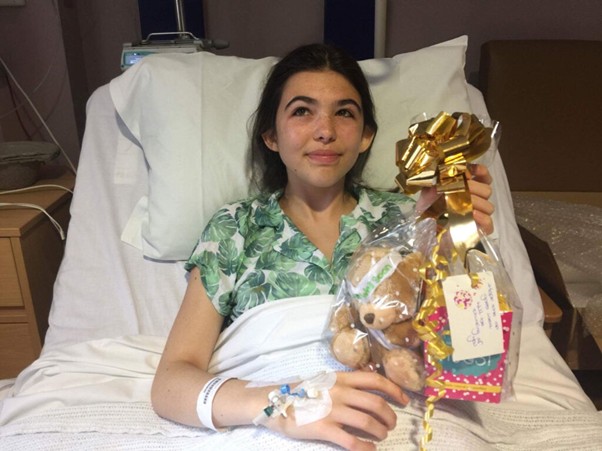
From Crawling in Circles to Walking Free: Lydia's Story
Meet Lydia — born with hip dysplasia, her story was so like mine that I HAD to share it.
Doctors' dismissal. Mental health struggles that no one connected to her surgeries. Always feeling like a freak—until one day, one person helped her connect the dots, so her healing could really begin.
But I'll let Lydia tell you the rest…
When They Said Nothing Was Wrong (But Something Clearly Was)
I was born with hip dysplasia, but it took a while for anyone to believe it.
When I started crawling—maybe around 6 months to a year old—my parents noticed I was crawling in circles. Like, literally going around and around instead of in a straight line.
My parents knew something was wrong. So they took me to the doctor.
The doctor did all the tests—the clicky hip stuff—and said there was nothing wrong. Everything was fine.
But my mum had this mother's instinct. She knew something was up.
So she kept going back. Multiple times. Kept pushing them to listen to her.
And eventually, they discovered I had hip dysplasia.

The Baby Operations I Don't Remember
I had maybe two or three operations as a baby to try and correct it.
Then I was put in a hip spica—which is basically a cast from my knees to my chest—for a few months to try and fix the alignment.
Things were fine for a while after that. But as I grew—and I'm quite tall now—it started causing problems again.
Age 6: Pins and a Plate
When I was about 6 years old, I had another operation. I can't tell you the name because it was so long ago, but they put pins and a plate in my hip to try and correct it.
Then a year later, they had to take them out again.
So that was two more operations.
Things were okay for a few years. Then the pain started coming back. When I walked, I had a limp. Backache. Loads of different problems just kept popping up.
Age 14: The Operation That Changed Everything
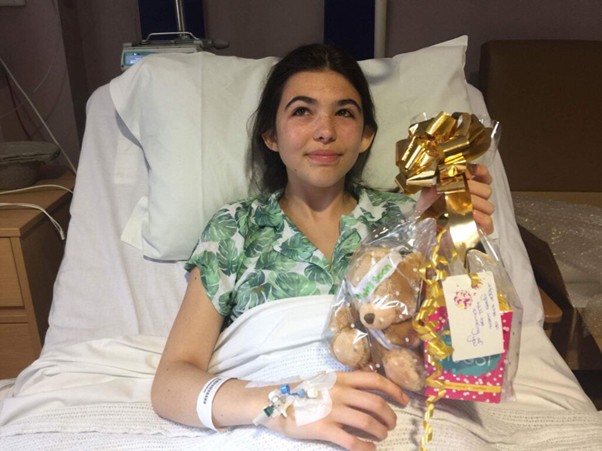
When I was 14, I had a big major operation.
They basically broke my pelvis, moved it, and put some major big pins and a plate in it to try and correct everything.
I actually saved the hardware—I have it in my drawer. Brought it into show and tell in my class.
That operation really wiped me out for a good few months. I was out of school for quite a few months. I was in a lot of pain afterwards.
And honestly? It felt like it didn't help at all. It felt like it made things worse. Made my pain worse.
I think that's where the trauma and the PTSD really stem from—that particular operation when I was 14.
Feeling Like an Alien in My Own Body
I felt very uncomfortable with my body after that surgery.
The metal in my hip really stuck out. At the time, I was very, very skinny—I mean, I was only 14, so I was small anyway. But I could see the metal through my skin. It just really stuck out.
And it freaked me out.
I couldn't touch it. Couldn't look at it. Couldn't go anywhere near it.
I was already at a very tender age, going through puberty, trying to figure myself out. And then having this alien thing in my hip? It really, really freaked me out.
I just didn't want anything to do with my body.
When Depression Set In (And No One Knew Why)
I became very reclusive. Didn't really want anyone near me or to touch me.
I couldn't hug my friends or family.
Looking back now, I was very depressed. That's where my anxiety started.
My parents saw it. They supported me. But I don't think they fully knew where it was coming from.
I remember talking to my parents and they were saying.
"It's just all the drugs you're on. The painkillers and anti-sickness meds—they've messed you up. That's what's causing it."
But I always felt like it couldn't just be from painkillers. You don't get depressed from painkillers, really.
I kind of knew it was something deeper. But I never really made the connection.
No one had ever mentioned that something physical like that—that had happened to me over years and years—could link to the mental.
The correlation was never made. Which now seems so obvious. But at the time, I'd never thought about it. So it just wasn't an option.
Age 16: The Hip Replacement That Actually Helped
When I was 16, I finally got my hip replacement.
They had to wait until my joints and bones had fused—until I'd stopped growing. That was the absolute earliest they could do it.
I think it got to a point where my hip was so bad, so mangled from years and years of different operations, that when my consultant eventually got to my case, he apparently said,
"Why haven't I seen this girl before? She needs to come in immediately."
The hip replacement was probably one of the least traumatic operations I've had.
It was so easy and simple compared to the one when I was 14. The pain was so minimal. They get you up and out the next day. It's so routine and normal that I didn't really have the chance to sit and wallow about it.
I've never been that good with physio and sticking to it, but I really tried this time. My parents were so supportive.
The physical recovery really wasn't as bad as we were expecting. Within a month or so, I was walking without crutches.
And mentally? It didn't disrupt my life too much.
I'd just finished secondary school. It was summer holidays, so I didn't miss any school. In the autumn, I went to college like normal, not on crutches.
Previous operations, I was in and out of school, missing months at a time. I think that really impacted me as a teenager. But by the time I got to 16, it didn't disrupt my life.
I went to a new school in September and felt like a normal person. No one had to know. I was a new person.
When the Panic Attacks Started
Fast forward to my first year of university, at the beginning of the pandemic.
I started getting really bad panic attacks. Being in public was just proving really difficult. It was really starting to impact my life.
I was going back to the hospital at that point for checkups, and I think that was triggering it.
So I decided to go to therapy. Just a normal counsellor at first.
And she suggested that I might have PTSD from my experience with my hip over the years.
Something clicked in my brain. I was like, "Okay, there's something there that I need to work through."
We talked a lot about it. But eventually that therapy came to an end.
A year later, the panic attacks were still really bad, so I went on medication. That helped so much.
But a year after that, things were coming up with my hip again, and I wanted to be able to deal with it better. I wanted therapy that was more specific to my experience—not just general anxiety stuff, but someone who actually understood the impact the trauma had had.
Someone who could explain to me why the way I felt was connected.
EMDR: The Therapy That Changed Everything
In 2023, I had EMDR therapy for a couple of months.
It was the most intense experience. Very draining. Very difficult. I dreaded it every single week.
But it helped so much.
It helped to the point where I didn't even realise how much it had helped until a few months later when I was back at the hospital. I was able to deal with it better. I didn't freak out. I didn't have big panic attacks.
I understood my own trauma a lot more. The impact it had.
It was horrible going through EMDR at the time—such an intense kind of therapy. But it really, really made a difference.
Memories came up that I hadn't thought about for ages but were clearly still having a big impact on my body that I didn't even know about.
It's very interesting what comes up when you just have to sit with those memories.
Teaching My Family About Trauma
Over the last few years, as I've learned about trauma and PTSD, I've kind of had to teach the people around me as well.
Like, "I'm not just randomly reacting like this or feeling like this in a hospital or having anxiety about this out of nowhere. This is where it comes from. This is how trauma works."
Making those links for other people helps them understand. Because it impacts their life like it impacts mine.
It's been a process of educating my family while I'm still learning myself.
What I wish someone had told me
"You're not some kind of freak accident."
You're not the only person to have gone through this. There are other people. It's normal. It's a natural reaction to what you went through.
You're not overreacting. This is completely understandable why you're feeling like this.
Recognise that your mental struggles are probably linked to your physical trauma.
If you've gone through traumatic stuff with your body, how you're feeling mentally is almost definitely connected to your physical history and health.
It might not have made the link before, but as soon as you do, so many things make sense.
It's normal. You're not the first person to develop anxiety or depression from something like that. You're not abnormal. You're not the only one.
I wish someone had just tapped me on the shoulder when I was 14 and said, "This is why you're feeling like this. It's happened before. It's happened to many people."
And one day, you will have some kind of clarity and perspective on it. You'll understand where it came from and be able to get through it.
But when you're in that dark point, it feels like you're going to be like that forever.
The more you work on it, the less scary it becomes.
Final Thoughts
Lydia's story is a powerful reminder that physical trauma and mental health are deeply connected—even when no one tells you that.
What stuck with me most was her mum's persistence ("I knew something was wrong"), the years of feeling like a "freak," and that moment when a therapist finally said, "You might have PTSD from your surgeries" and everything clicked.
Her message is clear: If you're struggling mentally after surgery, it's not the painkillers. It's not random. It's trauma—and it's real.
And with the right support—EMDR, understanding, people who get it—healing is absolutely possible.
If you're navigating your own medical trauma, you're not alone. You're not overreacting. And you're definitely not a freak.
Share Your Story — Help Someone Else Heal
Are you a woman who's been through surgery, trauma, or scarring — and come out the other side?
You don't have to be "fully healed" to share your journey. You just need a voice — and the courage to use it.
Your story can help someone else feel seen. It can show another woman that she's not alone, that healing is possible, and that scars can be beautiful too.
Want to share your Scarred and Fabulous story?
Fill out the form below and I will be in touch 🩷
If you want to remain anonymous, that's totally fine — it doesn't mean your story isn't worth telling.
👉 [I want to share my story - Link]
Related Posts:
[What Happens When ONE Doctor Speaks Up About Childhood Medical Trauma]
[7 Signs You Have Medical PTSD (That Your Doctor Never Mentioned)]
[Abigail's Story: How One Doctor's Warning Changed Everything]


