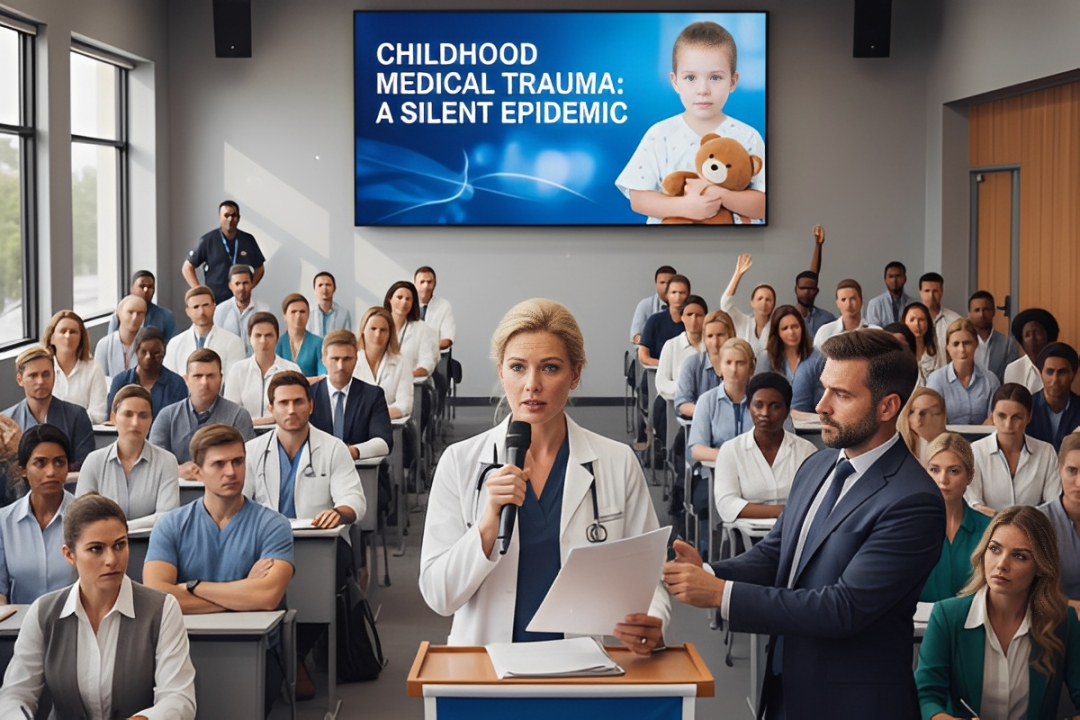
What Happens When ONE Doctor Speaks Up About Childhood Medical Trauma
I recently interviewed a woman named Abigail Marin, and it fucking broke me open.
Not because her story was sad—though it was hard to hear at times. But because of what her story revealed about mine.
Abigail and I have eerily similar medical histories. Both diagnosed with serious conditions at age 6. Both underwent multiple complex surgeries throughout childhood. Both experienced the terror of being handed over to strangers in operating rooms, enduring pain we didn't understand, feeling powerless in our own bodies.
But there's one critical difference between us.
One single conversation changed everything for her.
And the absence of that conversation destroyed 30 years of my life.
The Conversation That Changed Abigail's Life
When Abigail was six years old, preparing for her first major surgery to remove a facial tumor, her anesthesiologist did something most medical professionals never do.
They pulled her mum aside and said:
"You might want to get her some mental health support. Surgery like this—especially at her age—can have lasting psychological effects."
That's it. One conversation. One doctor who understood that Pediatric Medical Traumatic Stress is real.
Abigail's mum listened. She got Abigail into therapy immediately. The psychologist helped her understand the things she couldn't name as a child—like why hospital beeping made her anxious, why school bells triggered her, why she went selectively mute as a way to take control when she felt powerless.
Abigail's family learned alongside her. They understood that her silence wasn't rudeness—it was fear. They made space for her anger. They validated her feelings instead of dismissing them.
Because ONE doctor spoke up, Abigail:
Started therapy at age 6 (not 34)
Understood where her anxiety came from
Had a family who knew how to support her
Learned to manage her trauma responses early
Became an ambassador for Changing Faces UK in her teens
Uses her platform now to help others feel seen and accepted
She still lives with the effects of childhood medical trauma. She's never been formally diagnosed with PTSD, but she's had to learn how to navigate it. The difference is: she had tools from the beginning.

The Conversation That Never Happened (My Story)
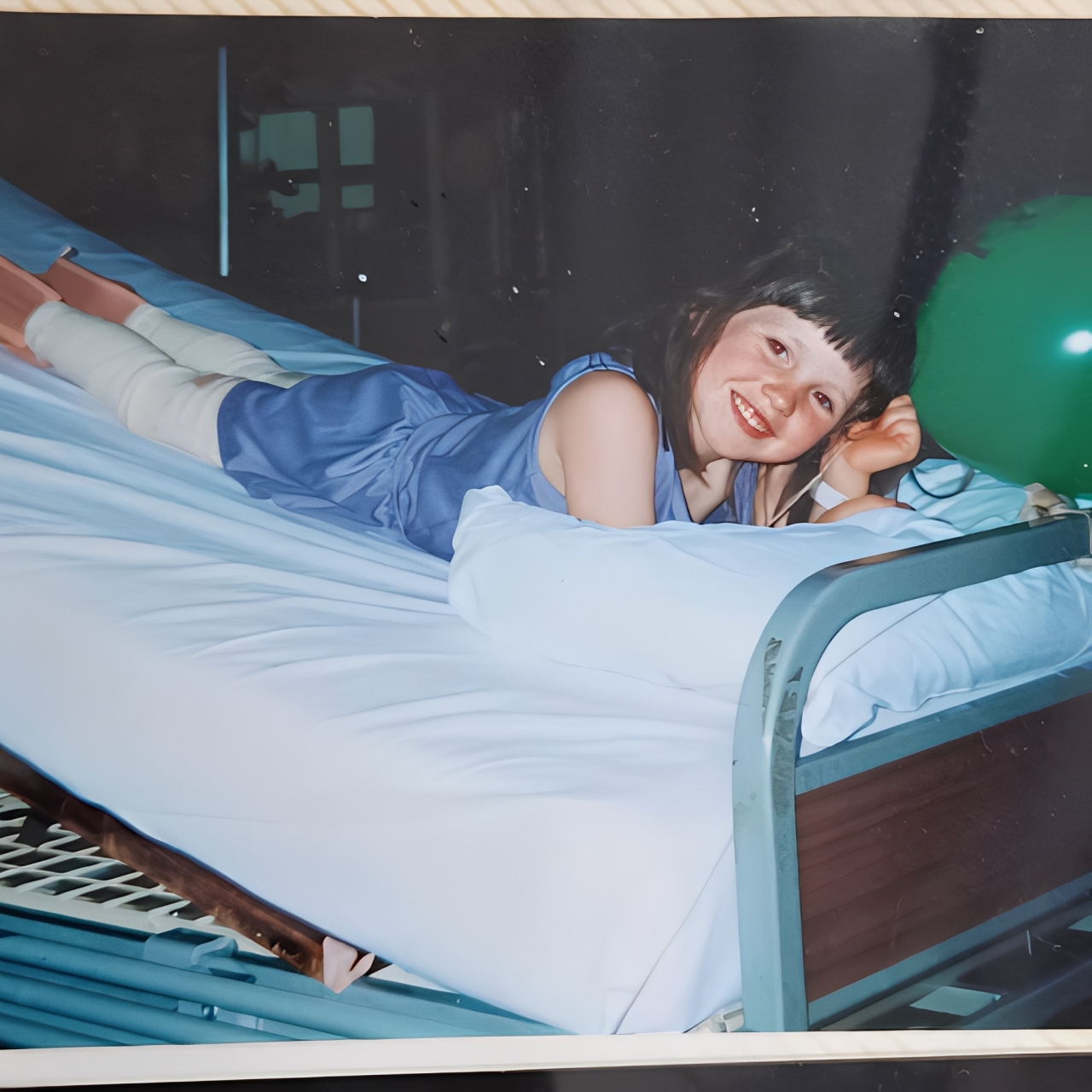
I was four years old when I had my first hip surgery.
Not one surgery—multiple. Four hip realignments. Then they broke both my legs to correct the alignment. I spent my 5th birthday in the hospital.
Not one doctor mentioned mental health. Not one nurse suggested therapy. Not one medical professional warned my parents that Pediatric Medical Traumatic Stress could turn into lifelong PTSD if left unaddressed.
My parents were amazing. They took turns living at the hospital during my surgeries. But there were key moments they missed—moments when I needed them most. And none of us understood why those moments mattered so much.
After I came home, my parents noticed changes. I withdrew. I couldn't process emotions. I went silent in ways that felt different from normal childhood quietness.
But no one connected it to the surgeries. How could they? No one told them this could happen.
So my childhood medical trauma went unrecognised, unprocessed, and unhealed.
And it metastasised.
What Unaddressed Childhood Medical Trauma Looks Like
By adolescence, I had spiralled into:
Drug abuse
Alcohol abuse
Violence
Rage at my parents that lasted nearly a decade
I harboured a darkness that consumed me. I felt shame and self-hatred so deep I couldn't see a way out. Despite knowing deep down that I had a good upbringing, I was convinced something was fundamentally wrong with me.
I thought I was weak. Broken. Too sensitive.
I blamed myself for not being able to "just get over it."
It took 30 years to get a PTSD diagnosis.
Thirty fucking years.
The Gap That Destroys Lives
Here's what kills me about Abigail's story:
We had the same trauma. Different outcomes. Because of ONE conversation.
Abigail's anesthesiologist understood that surgery isn't just a physical event. They knew that for a child whose brain is still developing—especially before age 7—medical procedures can be profoundly traumatic.
They knew that Pediatric Medical Traumatic Stress (PMTS) is a documented condition that affects how children process pain, fear, powerlessness, and bodily autonomy.
They knew that early intervention matters.
So they spoke up.
And Abigail's family had the chance to get ahead of the trauma instead of spending decades trying to recover from it.
What Parents Need to Know (That No One Told Mine)
If your child is facing surgery, here's what I wish someone had told my parents:
1. Pediatric Medical Traumatic Stress is real.
Research shows that trauma before age 7 significantly impacts a child's development, often causing lasting health and psychological challenges. Early hospitalisations disrupt cognitive and emotional development.
Your child's brain is still forming. Surgery isn't just a medical event—it's a psychological one.
2. Your child may not have the words to tell you they're traumatised.
Children often lack the resilience to process surgical experiences effectively. They can't explain why they feel unsafe. They can't articulate that being held down for an IV felt like a violation.
So they go silent. Or they lash out. Or they withdraw.
Don't dismiss these as "just a phase." These are trauma responses.
3. Early intervention changes everything.
When Abigail started therapy at 6, she learned to name her feelings. She understood that her body's responses (anxiety, selective mutism, fear) were normal reactions to abnormal experiences.
She didn't spend 30 years thinking she was broken.
She got tools early. And that made all the difference.
4. You can't protect them from the surgery—but you can protect them from the trauma.
My parents couldn't stop my surgeries. They were medically necessary. But if they'd known about PMTS, they could have:
Started therapy immediately
Learned how to talk to me about what was happening
Understood why my silence and withdrawal mattered
Created space for my anger instead of punishing it
Connected my behavioural changes to the trauma
One conversation could have saved 30 years.

The Difference ONE Doctor Can Make
I'm not angry at my parents. They did the best they could with the information they had.
I'm angry at the system that doesn't prepare medical professionals to have this conversation.
I'm angry that up to 20% of children develop PTSD after surgery, and yet Pediatric Medical Traumatic Stress is barely mentioned in medical training.
I'm angry that parents are left in the dark while their children develop trauma patterns that will follow them for decades.
But I'm also hopeful.
Because Abigail's story proves that ONE doctor speaking up can change everything.
One conversation can give parents the tools they need.
One early therapy referral can prevent a lifetime of suffering.
One acknowledgment that "this might affect your child's mental health" can shift the entire trajectory of a child's life.
Abigail's Full Story (Coming Next Week)
I'm sharing Abigail's complete journey next week:
How she navigated selective mutism and learned to find her voice
What it was like going through 10+ years of facial reconstruction surgeries
How her family learned to support her through the trauma
The moment she realised she might have PTSD (and what she did about it)
Why she became an ambassador for Changing Faces UK
Her message for other childhood medical trauma survivors
Want to read Abigail's full story?
Sign up for blog updates—plus behind-the-scenes content, and updates on my upcoming book about medical trauma and recovery.


