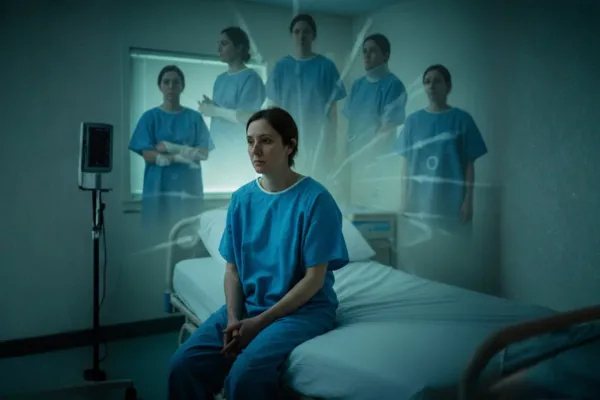
Trauma Patterns You Can't See But Keep Putting You Back in Hospital
I didn't realise I was doing it.
For 30 years, I kept ending up back in the hospital. Different injuries. Different circumstances. But always the same result: me, in a hospital bed, my body broken again.
Everyone thought I was just reckless. Unlucky. An adrenaline junkie with bad judgment.
Even I believed that for a while.
Until I listened to an audiobook that made me stop mid-walk, pull out my headphones, and say out loud: "Holy shit. That's me."
The book was The Body Keeps the Score by Bessel van der Kolk. And it explained the pattern I'd been living but couldn't see.
I wasn't just accident-prone. I was unconsciously re-traumatising myself.
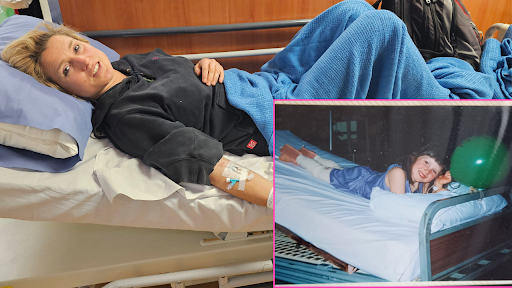
The Bike Crash That Changed Everything
I was cycling fast. Too fast. Trying to outrun my head, trying to feel something other than the shame eating me alive.
I heard someone scream—a warning. I should have stopped.
I didn't.
The crash was brutal. I woke up in the hospital with broken bones and fractured memories flooding back. Childhood surgery memories I thought I'd forgotten. My body was reliving all my past trauma in a flurry of emotions.
And I became explosive.
Lashing out at nurses. Rage at doctors. Panic attacks. Shutting down completely.
The medical staff had no idea why I was reacting this way. To them, I was just a difficult patient. An overreaction to a bike accident.
But my body knew something they didn't: This wasn't my first time here. And every time I ended up in a hospital, it stacked on top of all the others.
The Pattern I Couldn't See
After that crash, I started looking back. Counting the accidents. The hospital visits that "just happened."
And I started asking: Why?
Why did I push myself physically right before big emotional moments?
Why did I make risky decisions when I was overwhelmed?
Why did something always go wrong right when life was getting good?
That's when I discovered the pattern.
Every single time I ended up in the hospital, there had been emotional overwhelm right before.
A fight with family. Something I was deeply ashamed of. Exams I was terrified of failing. Or sometimes, just life going too well—which terrified me even more.
I would push myself physically. Or unconsciously make wild choices. And somehow, I'd end up back in the hospital.
My brain would stack the new trauma on top of all the old ones, building evidence for core beliefs I didn't even know I had:
I'm worthless. I'm broken. I'm not enough. No one cares. No one will listen.
And those beliefs became rooted so deep, I didn't question them.

What The Body Keeps the Score Taught Me
Here's what I learned from van der Kolk's book that finally made everything click:
Trauma Survivors Engage in Risky Behavior—Not Because They Want Harm
The book explicitly discusses how trauma survivors often engage in:
Reckless driving (or cycling)
Substance abuse
Dangerous relationships
Thrill-seeking
Aggression
Re-enacting traumatic dynamics
Not because they want to get hurt. But because their nervous system is trying to regulate itself.
When you live with unprocessed trauma, your body gets stuck between two states: numb or hyper-aroused. There's no middle ground.
So you seek out intense experiences—danger, speed, chaos—because feeling something is better than feeling nothing.
Re-enactment: Returning to Danger Because It Feels Familiar
This was the part that stopped me in my tracks.
Van der Kolk explains that traumatized people often:
Gravitate toward situations that mirror their trauma
Re-enter dynamics of powerlessness, danger, or chaos
Choose environments that feel familiar, even if unsafe
Why? Because familiar ≠ safe, but the nervous system confuses the two.
For someone whose earliest memories are of hospitals—of being held down, in pain, powerless—the hospital can feel like "home" in a deeply fucked up way.
Not consciously. I didn't want to be there.
But my unconscious kept finding ways to put me back.
Chaos Can Feel Organizing to a Traumatized Nervous System
Here's the thing most people don't understand:
For someone whose baseline nervous system state was shaped in trauma, calm can feel dangerous.
Stillness allows memories to surface
Peace feels unfamiliar or unsafe
Chaos feels organizing
Hyperarousal feels like home
So they unconsciously return to:
Speed
Violence
Control struggles
High-risk situations
Not because they lack intelligence or self-control. But because their body learned survival there.
The Self-Sabotage Pattern
One of the craziest realisations was this: I also had this pattern when life was going too well.
Got a promotion? Suddenly I'd make a decision that would blow it up.
Relationship getting serious? I'd push them away or create drama.
Things feeling stable? Watch me find a way to destroy it.
I never thought I deserved a "great life." Success felt foreign. Happiness felt dangerous.
So my unconscious would find a way to return to what was familiar: chaos. Pain. The hospital.
Because at least there, I knew the rules. I knew how to survive. I knew my role.
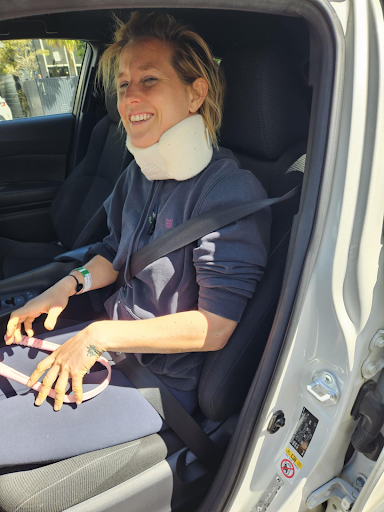
The Common Denominator: Emotional Overwhelm
After running through every event that landed me in the hospital, I found the common thread:
Emotional overwhelm.
Whether it was:
A fight with family
Shame about something I'd done
Terror about exams or expectations
Life getting "too good" and not feeling worthy
I would push myself physically. Make wild choices. Take unnecessary risks.
And somehow, I'd end up back in the hospital.
Where my brain would add this new trauma to the pile, reinforcing all those core beliefs:
See? You ARE broken. You DON'T deserve good things. You CAN'T escape this.
Man, the brain is a complex thing.
Other Times I Ended Up Back
Bear chases. Car crashes. Shark-infested waters. Riots. Lockdowns. Political coups.
You name it, I've probably ended up in a hospital because of it.
Every. Single. Time. Same pattern: emotional trigger → risky behavior → hospital.
And I had no idea I was doing it.
You'll have to grab the book for the full stories. But trust me—the pattern was there, hiding in plain sight for 30 years.
When I Finally Saw the Pattern
The moment I connected these dots, everything shifted.
I wasn't "unlucky." I wasn't "reckless." I wasn't "broken."
My unconscious was trying to regulate a nervous system that had been shaped by childhood medical trauma.
My body had learned:
Hospital = familiar
Chaos = organizing
Pain = predictable
Powerlessness = home
So when emotional overwhelm hit, my nervous system would unconsciously seek what it knew: the hospital.
Not because I wanted to suffer. But because my brain was trying to make sense of a world that felt unsafe everywhere else.

Breaking the Pattern
Recognising this pattern was the first step. But breaking it? That took years of work.
I had to:
1. Learn to recognize emotional overwhelm BEFORE it turned into physical risk
This meant developing awareness of my triggers. Noticing when I was ramping up to do something dangerous. Asking myself: What am I really feeling right now?
2. Develop tools to regulate my nervous system without needing chaos
Breathwork. Somatic practices. Therapy. Finding ways to feel something without needing to put myself in danger.
3. Challenge the core beliefs the pattern was reinforcing
I'm not broken. I don't deserve pain. I AM worthy of good things. Calm doesn't mean danger.
4. Forgive myself for the decades I spent unconsciously repeating this pattern
I did the best I could with the tools I had. My brain was trying to protect me. It just learned the wrong lessons.
The Full Story Is in the Book
What I've shared here is just a glimpse of the unconscious patterns medical trauma created in my life.
The full story includes:
Every accident, every hospital return, every moment I sabotaged myself
The neuroscience of why trauma survivors seek familiar chaos
The specific tools I used to break these patterns
How I learned to feel safe in calm instead of only in crisis
I'm writing it all down because I know I'm not the only one living this pattern.
If you've ever wondered why you keep ending up in the same situations, making the same "mistakes," sabotaging good things—it might not be a character flaw. It might be an unconscious trauma pattern.
Want to read the full story?
My book launches in May 2026, and I'm building a team of women who'll read it first.
**When you join the launch team, you get:
✅ Free advanced copy (you'll read it before anyone else)
✅ Exclusive 50% off on the print version so your Amazon review shows as "verified purchase" (Just $9.99)
✅ Behind-the-scenes access to the campaign + live Q&A sessions
✅ Early review instructions (yes—you can post your review even before you finish reading!)
✅Virtual launch party invitation (celebrate with us!)
✅ The deep satisfaction of knowing your voice is helping someone else find healing, hope, and the truth that they're not alone
This isn't just about reading a book early. It's about being part of a movement to make medical trauma part of the conversation.
The Bottom Line
For 30 years, I thought I was just unlucky. Reckless. Self-destructive.
Turns out, my body was unconsciously seeking what felt familiar: the hospital, chaos, pain, powerlessness.
Not because I wanted to suffer. But because my nervous system was shaped in trauma and didn't know any other way to feel safe.
Once I saw the pattern, I could finally break it.
And if you're reading this thinking, "Holy shit, that's me"—you're not alone.
Your brain isn't broken. It's doing exactly what trauma brains do.
And there IS a way out.
Kim
Related Posts:
7 Signs You Have Medical PTSD (That Your Doctor Never Mentioned)
What Happens When ONE Doctor Speaks Up About Childhood Medical Trauma
Resources:


